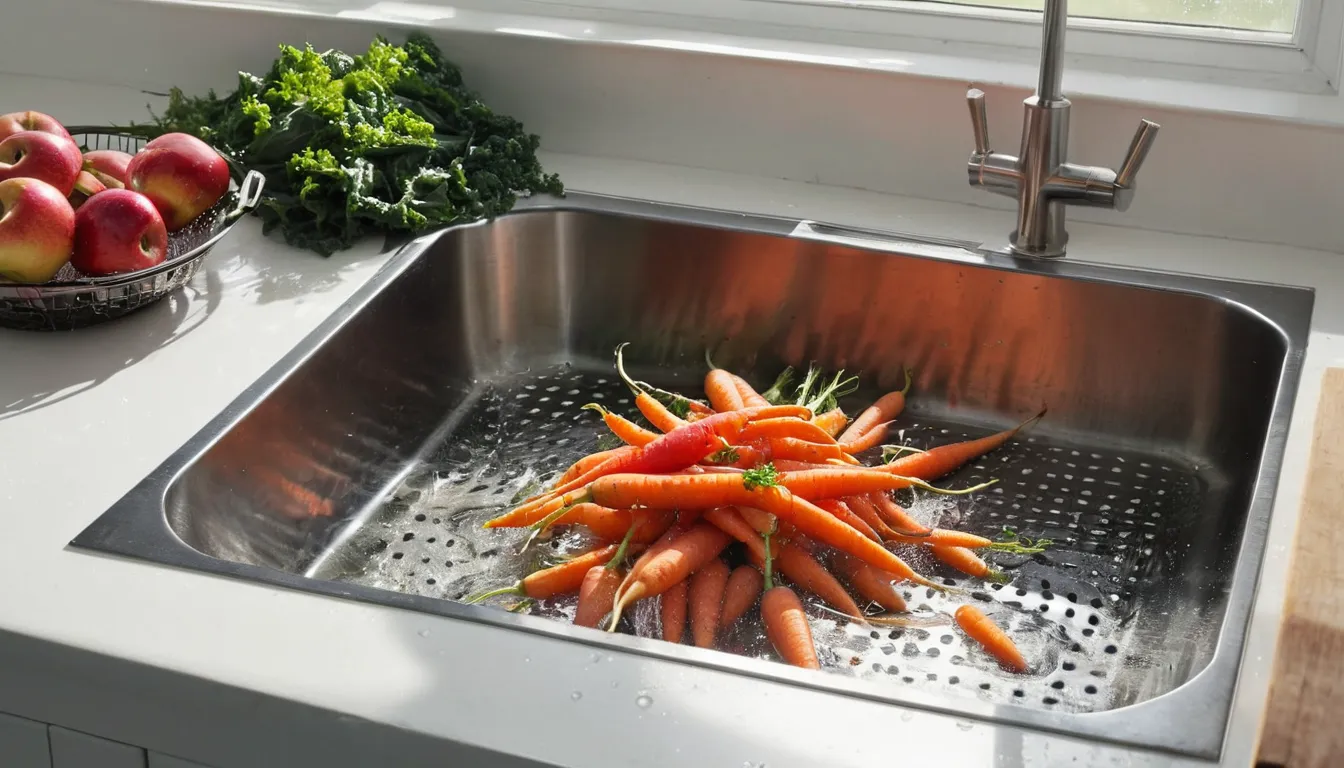
Start with clean hands and tools
Wash your hands with soap and water for about 20 seconds before you handle produce. Use a clean cutting board and knife. If you have prepared raw meat, poultry, seafood or eggs on a board, wash it with hot soapy water before using it for produce, or keep a separate board for fruit and vegetables.
Wash the produce
US food-safety guidance is simple: rinse fruits and vegetables under cool running water just before you use them, and rub them with your hands as you rinse. For firm produce such as carrots, apples, beets, potatoes and citrus, scrub with a clean produce brush.
- Wash produce even if you plan to peel it. A knife can carry germs from the skin into the flesh.
- Don't use soap, detergent or bleach on produce. Plain running water is what agencies advise.
- Dry produce with a clean towel or paper towel, which removes more surface germs.
- Wash just before use. Washing and then storing produce can make it spoil faster.
- Leafy greens hold grit. Separate the leaves and rinse each one, or swish them in a bowl of cool water and lift them out.
For current details, see the produce safety pages at FoodSafety.gov and the FDA.
Cut away damage
Cut off bruised, soft or damaged spots, with a margin around them. Throw out produce that is moldy, slimy or smells off. Juicing hides bad flavors only up to a point, and it doesn't make spoiled produce safe.
What to peel
| Produce | Peel? | Notes |
|---|---|---|
| Oranges, grapefruit | Yes, for electric juicers | Peel and pith are bitter; halve them for a reamer |
| Lemons, limes | Usually | A thin strip of peel adds aroma, more turns bitter |
| Pineapple | Yes | Cut off rind and crown; the core can stay |
| Mango | Yes | The skin bothers some people; cut the flesh off the pit |
| Kiwi | Optional | Peel for a smoother taste |
| Carrots, beets | Optional | Scrub well if you leave the skin on |
| Cucumber | If waxed | Thin unwaxed skins can stay |
| Ginger | Optional | Scrape with a spoon if you want it peeled |
Cores, pits and seeds
Take out apple cores and seeds, and remove the pits from cherries, peaches, plums, apricots and mangoes before juicing. Pits can damage blades and screens. Apple seeds and the kernels inside stone-fruit pits also contain a compound that can release cyanide when crushed. Swallowing a stray whole seed is generally not a concern, but grinding a lot of them into juice is a different matter, so most guides advise taking them out.
Citrus seeds are not dangerous but taste bitter when crushed. Melon seeds can go through a blender and strainer, or you can scoop them out first.
Cut pieces to fit
Check your juicer's manual for the size of piece it takes. Fast juicers with wide chutes take whole small apples. Slow juicers usually need smaller pieces and short lengths of stringy produce like celery. Never push food down with your fingers or a knife; use the pusher that came with the machine.
Once it's prepped, see the food safety page for how to handle the finished juice.