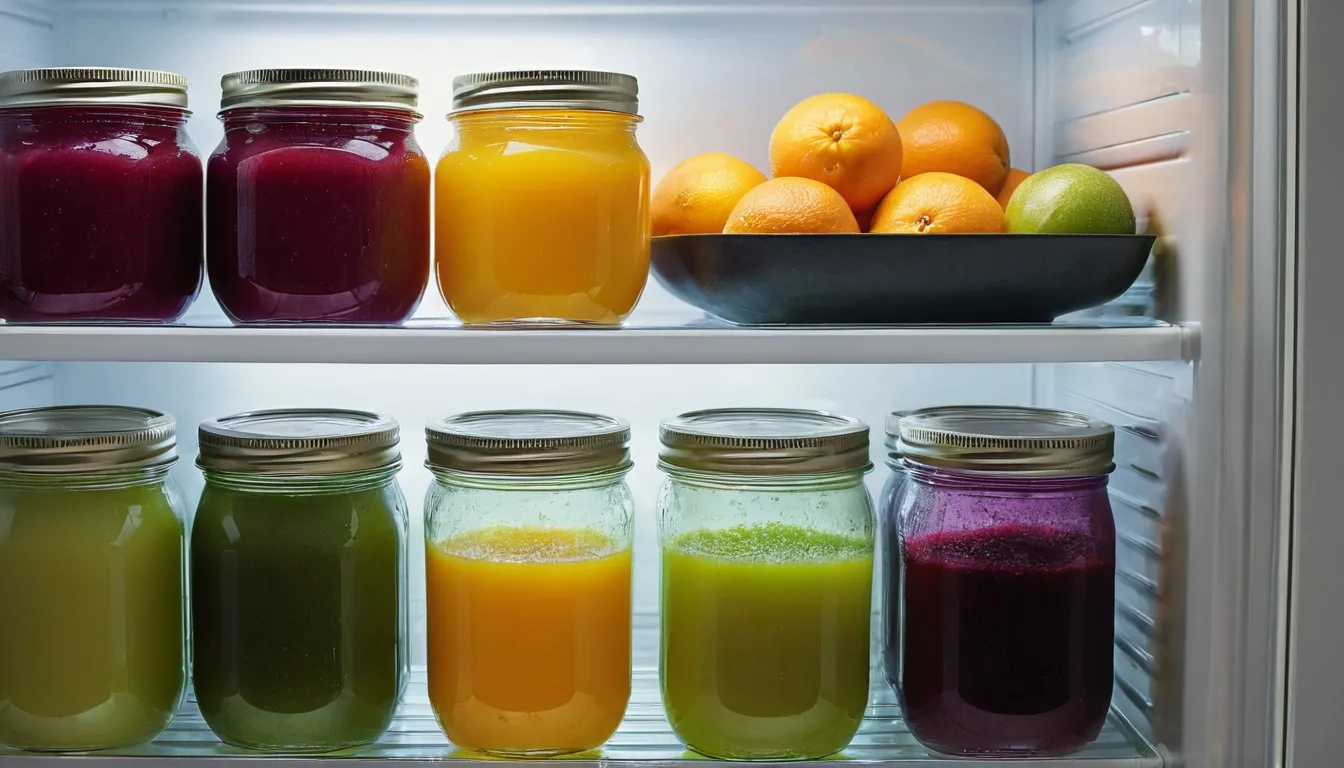
Drink it soon
The simplest plan is to make only what you will drink that day. Homemade juice is raw and unpasteurized, so it doesn't keep like store-bought juice. If you must store it, refrigerate it right away and use it within about a day. Some sources allow a little longer for very cold, airtight juice, but flavor fades and the food-safety margin shrinks the longer it sits. When in doubt, throw it out.
Containers
- Glass jars with tight lids are easy to clean, don't hold smells and let you see the juice.
- Fill to the top. Less air in the jar means less browning and flavor loss.
- Use clean containers. Wash jars and lids in hot soapy water and let them dry.
- Label them. Write the date and what's in each jar on a strip of tape.
- Store at the back of the fridge, where it stays coldest. The door warms up every time it opens.
Keep your fridge at 40°F (4°C) or below. A cheap fridge thermometer tells you if it's cold enough.
What happens while juice sits
Fresh juice changes within hours, even when it is cold. None of these signs means juice is unsafe by itself, but they tell you it has been sitting.
| What you see | Why | What to do |
|---|---|---|
| Layers or a cloudy bottom | Fine pulp settles out | Shake or stir before pouring |
| Browning, especially apple and pear | Contact with air | A squeeze of lemon slows it; fill jars to the top |
| Foam on top | Air mixed in while juicing | Skim it, or let it settle a few minutes |
| Flat, dull flavor | Aroma fades over time | Drink sooner next time |
| Fizzing, sour or alcohol smell, bulging lid | Fermenting or spoiling | Throw it out |
Freezing juice
Freezing is the best way to keep fresh juice for longer. Food kept frozen at 0°F (-18°C) stays safe, though quality slowly drops, so aim to use frozen juice within a few months.
- Freeze juice right after you make it, not after it has sat in the fridge for a day.
- Use freezer-safe jars or containers and leave about an inch of space at the top. Juice expands as it freezes.
- For small portions, freeze juice in ice cube trays, then move the cubes to a sealed freezer bag.
- Thaw in the fridge, not on the counter, and drink it within a day of thawing.
- Shake well after thawing, since the juice separates.
Frozen juice cubes are handy for cooling a fresh glass without watering it down. Mix and match flavors using the ideas on the combining flavors page.
Taking juice with you
If you carry juice to work or school, use an insulated bottle or a cooler bag with an ice pack, and drink it within a couple of hours. If the juice is for a young child or anyone else in the groups listed on the food safety page, read that guidance first.
Can I make juice the night before?
You can, but plan to drink it the next morning and keep it cold and airtight overnight. Expect some separation and a softer flavor than freshly made juice.
Does a slow juicer make juice last longer?
Juice from slow juicers tends to have less foam and may separate a little more slowly. It is still raw juice, so the same storage rules apply.